
International Water News & National Water News Coverage Angle
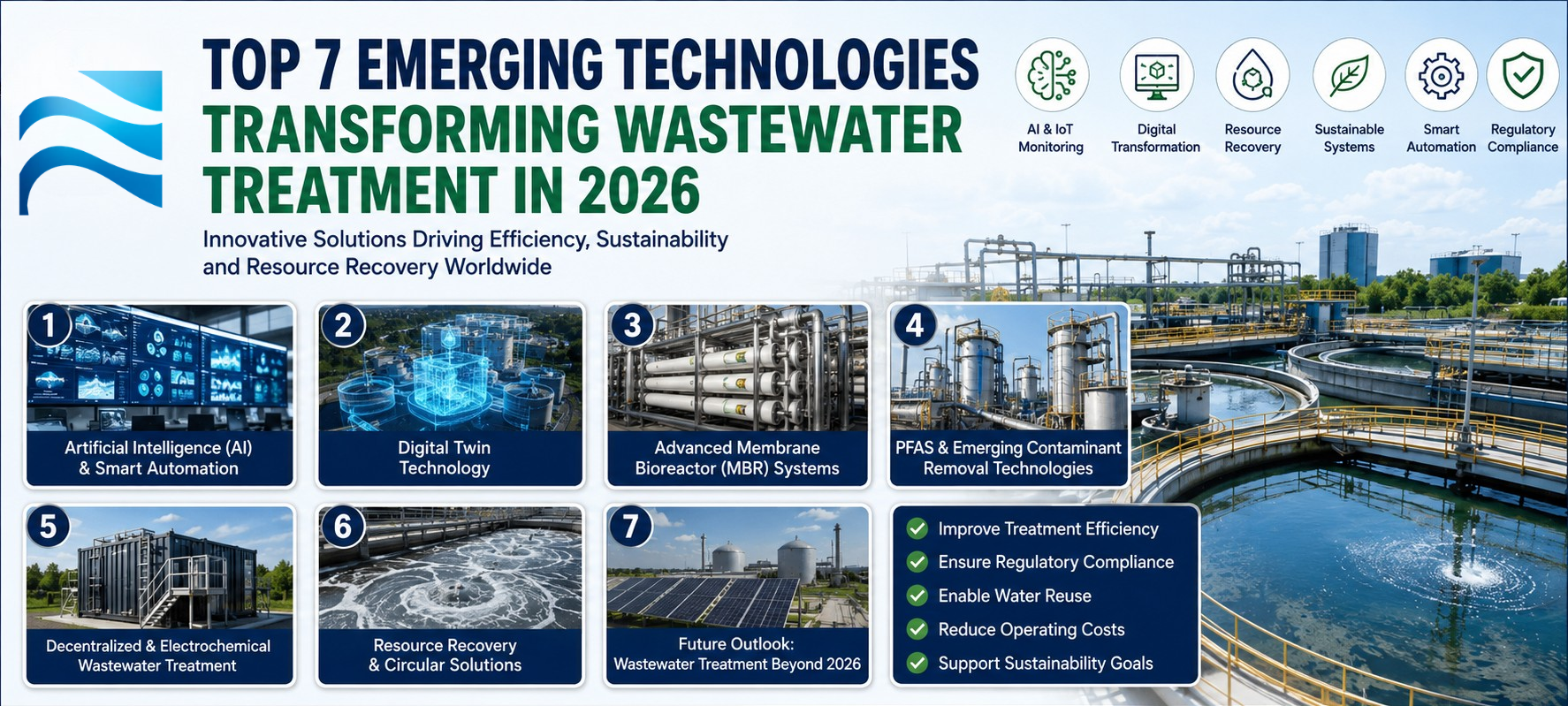
The wastewater treatment industry in 2026 is rapidly shifting from conventional treatment models toward intelligent, resource-efficient, and circular water management systems. Rising industrialization, stricter discharge norms, climate pressures, and growing water scarcity are accelerating the adoption of advanced technologies worldwide. From AI-powered treatment optimization to PFAS removal technologies, the sector is witnessing a major transformation.

Recent global research and industry developments highlight how digitalization, smart automation, membrane innovation, and decentralized systems are redefining wastewater infrastructure.
Article Agenda / Structure
1. Introduction
- Global wastewater challenges in 2026
- Increasing pressure on industries and municipalities
- Shift from “wastewater treatment” to “resource recovery”
- Role of smart technologies in sustainability and compliance
2. Artificial Intelligence (AI) & Smart Automation
Coverage Angle:
AI is becoming the brain of modern wastewater treatment plants.
Key Points:
- AI-driven predictive maintenance
- Real-time monitoring and automated dosing
- Energy optimization in aeration systems
- Reduction in operational costs
- Improved compliance with discharge standards
International Water News Focus:
- AI adoption in Europe, USA, Singapore, and Middle East
- Smart utility projects using machine learning
- AI-integrated digital monitoring systems
National Water News Focus (India):
- Smart STP/ETP adoption in industrial sectors
- CPCB online monitoring compliance
- AI applications in textile, pharma, food processing industries
Research highlights show AI is improving plant efficiency, predictive analytics, and operational decision-making in wastewater management.
3. Digital Twin Technology
Coverage Angle:
Virtual replicas of wastewater treatment plants are enabling real-time simulation and predictive control.
Key Points:
- Real-time plant simulation
- Predictive operational control
- Failure detection before breakdowns
- Data-driven decision making
- Integration with IoT sensors
International Water News Focus:
- European smart utility projects
- Industry 4.0 integration in wastewater treatment
- AI + Digital Twin convergence
National Water News Focus:
- Smart city wastewater infrastructure
- Digitization of municipal STPs
- Industrial water management modernization
Digital twin systems are emerging as one of the most important technologies for wastewater optimization and energy efficiency.
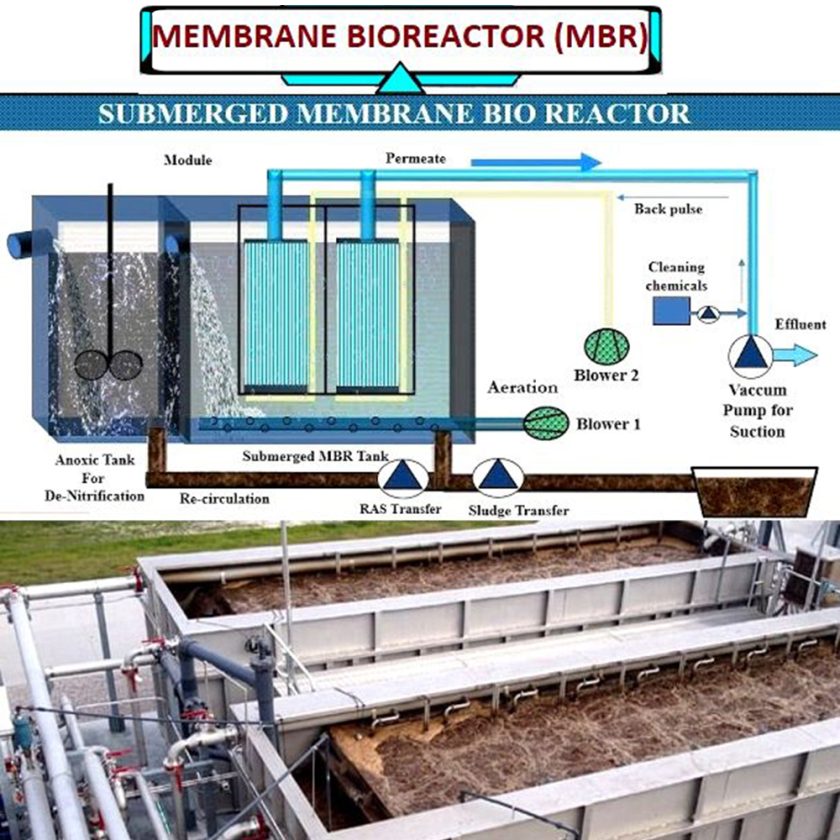
4. Advanced Membrane Bioreactor (MBR) Systems
Coverage Angle:
MBR technology is becoming the preferred solution for high-quality water reuse and compact treatment infrastructure.
Key Points:
- Superior effluent quality
- Space-saving treatment systems
- Enhanced nutrient removal
- Water reuse applications
- Industrial wastewater treatment efficiency
International Water News Focus:
- Water reuse projects in water-scarce regions
- Municipal wastewater recycling initiatives
- Integration with advanced oxidation technologies
National Water News Focus:
- Industrial ZLD projects
- Smart wastewater recycling plants
- Urban reuse initiatives in India
Advanced MBR systems are being increasingly adopted due to their efficiency in removing emerging contaminants and supporting circular water economy goals.
5. PFAS & Emerging Contaminant Removal Technologies
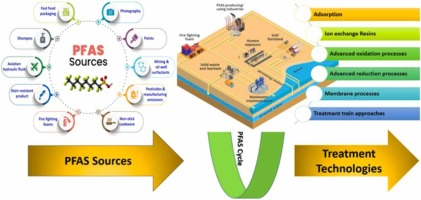
Coverage Angle:
The rise of PFAS regulations is driving innovation in advanced contaminant removal systems.
Key Points:
- PFAS (“Forever Chemicals”) treatment
- Advanced oxidation processes (AOPs)
- Photocatalytic membrane technologies
- Activated carbon and hybrid filtration
- Stricter global environmental regulations
International Water News Focus:
- US and EU PFAS regulatory developments
- Industrial contamination control
- Advanced treatment pilot projects
National Water News Focus:
- Growing concern around industrial contaminants
- Regulatory preparedness in India
- Need for advanced tertiary treatment systems
Research indicates PFAS treatment is becoming a major focus area for next-generation wastewater infrastructure globally.
6. Decentralized & Electrochemical Wastewater Treatment
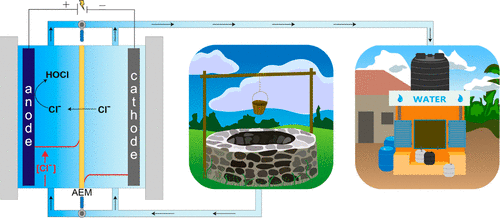
Coverage Angle:
Decentralized systems are gaining traction for remote, industrial, and smart urban applications.
Key Points:
- Compact modular treatment systems
- Low-energy wastewater treatment
- Electrochemical oxidation processes
- Rural and off-grid wastewater solutions
- Faster deployment and scalability
International Water News Focus:
- Sustainable decentralized sanitation systems
- Smart modular wastewater plants
- Circular economy-driven treatment models
National Water News Focus:
- Rural wastewater management
- Industrial cluster treatment systems
- Smart township and housing projects
Advanced electrochemical and decentralized systems are increasingly seen as future-ready alternatives for sustainable wastewater management.
7. Future Outlook: Wastewater Treatment Beyond 2026
Emerging Trends:
- Carbon-neutral wastewater plants
- Resource recovery from sludge
- Wastewater-to-energy systems
- Nutrient recovery technologies
- Autonomous treatment plants
- Circular water economy
Industry experts increasingly view wastewater treatment plants as “water resource recovery facilities” rather than disposal systems.
Conclusion
The wastewater sector in 2026 is entering a transformative era driven by digital intelligence, sustainability goals, stricter regulations, and circular economy principles. Technologies such as AI, digital twins, advanced membranes, PFAS removal systems, and decentralized treatment are not only improving treatment efficiency but also reshaping the future of water reuse and environmental protection globally.
For both International Water News and National Water News, these technologies present strong editorial opportunities around innovation, infrastructure modernization, industrial sustainability, regulatory evolution, and climate resilience in the water sector.